




Format basics
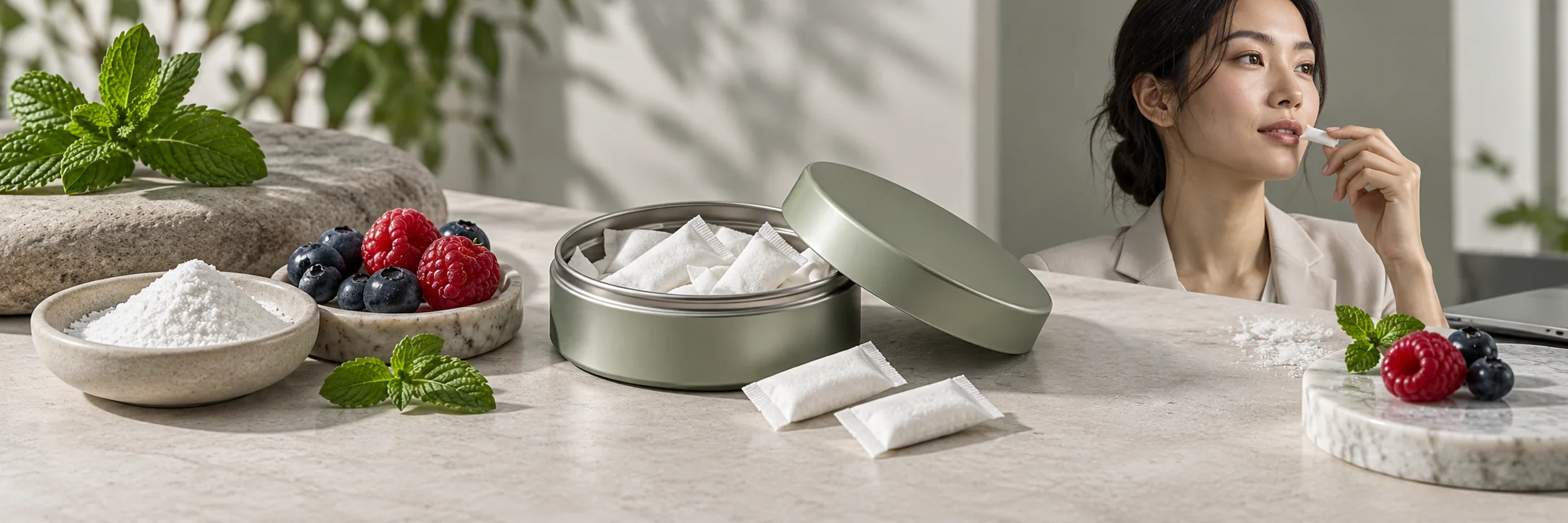
What are recovery pouches?
A useful definition separates the physical pouch from its ingredients, proposed use and evidence.
Read guideRelease & evidence
How pouch release works
Distinguish material wetting, ingredient release and biological exposure when planning a prototype.
Read guideFormat comparison
Pouches versus protein
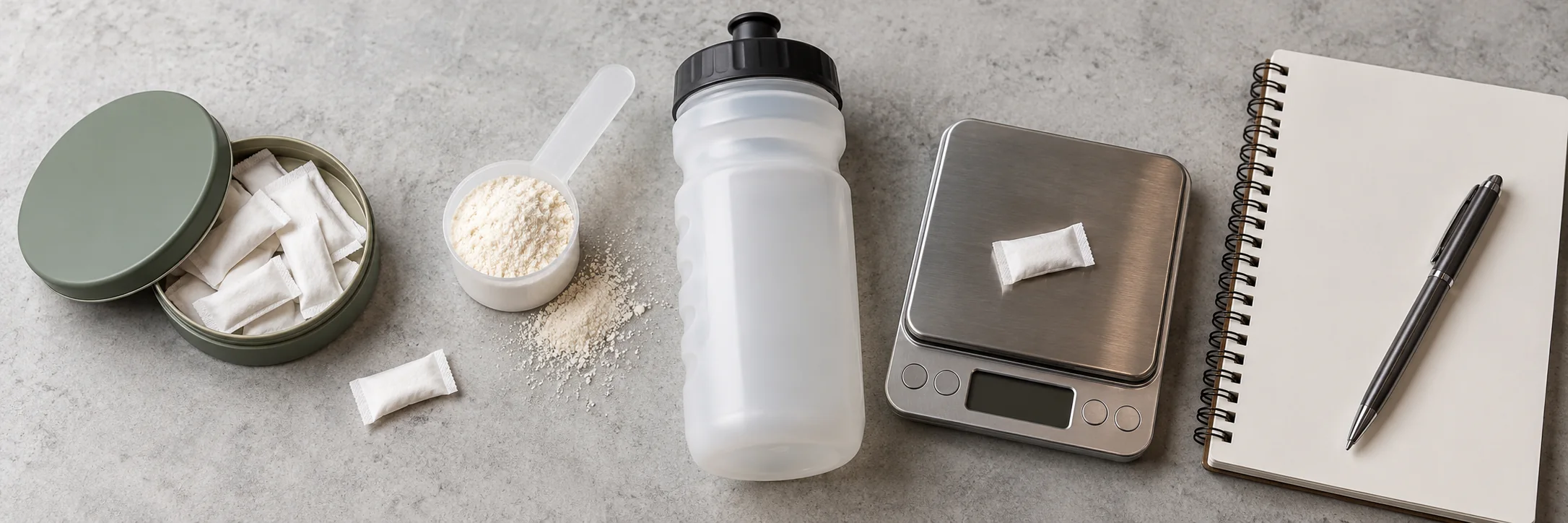
Compare nutrient payload and purpose before presenting a compact pouch as an alternative to a shake.
Read guideFormat comparison
Pouches versus energy gels
Use a side-by-side specification instead of treating every sports format as interchangeable.
Read guideMineral development
Hydration needs water
A mineral ingredient brief and a fluid-replacement claim are separate questions.
Read guideIngredient feasibility
BCAA: start with payload
Ask whether the intended amino-acid brief fits before commissioning a complex blend.
Read guideIngredient feasibility
Collagen in a small format
Make origin, specification and physical capacity visible in a collagen concept brief.
Read guideIngredient feasibility
Magnesium: form and taste
Define the mineral form, declaration basis and sensory target as separate specification items.
Read guideEvidence & claims
After-drink claims need care
Separate botanical formulation ideas from claims to cure a hangover or accelerate alcohol recovery.
Read guideIngredient feasibility
B vitamins and stability
Review low-level ingredient distribution, marker choices and the complete storage system.
Read guideIngredient procurement
Qualify a botanical brief
A botanical name needs a traceable material specification before it can support a reliable product brief.
Read guideEvidence & claims
Test the claim, not the label
An appealing phrase is a research question until the appropriate evidence exists.
Read guideSafety review
A pouch safety checklist
Safety belongs to the complete formula, material system, intended use and audience.
Read guidePouch engineering
Mini, slim or regular?
Format names help comparison, but dimensions and material specifications decide the product.
Read guidePackaging engineering
Engineer the round can
A shallow round can should be specified around protection, usability and the actual pouch count.
Read guideSensory development
Build a flavor scorecard
Make mint, berry, citrus and tropical comparisons reproducible rather than impression-led.
Read guideSampling & procurement
Approve samples with evidence
Different sample types answer different questions; make the approval scope explicit.
Read guideDevelopment transfer
Transfer a pouch specification
The handover should connect materials, process, tests, packaging and approval ownership.
Read guideQuality & documentation
Read the quality dossier
Evaluate what each document actually demonstrates, not how impressive its title sounds.
Read guideStability & packaging
Set a shelf-life programme
Shelf life is a conclusion from the final product system, not a standard number to copy.
Read guideMarket planning
Map the market review
Turn a destination name into a concrete classification, ingredient and label-review checklist.
Read guideSports due diligence
Athletes and supplement risk
Ingredient review and contamination controls are more useful than a blanket athlete-safe claim.
Read guideBrand & procurement
Start a recovery pouch brand
Build the business brief around decisions that a supplier can actually assess and quote.
Read guideCommercial planning
Quote MOQ and lead time
A useful quotation states the assumptions behind its quantities, dates and costs.
Read guide