
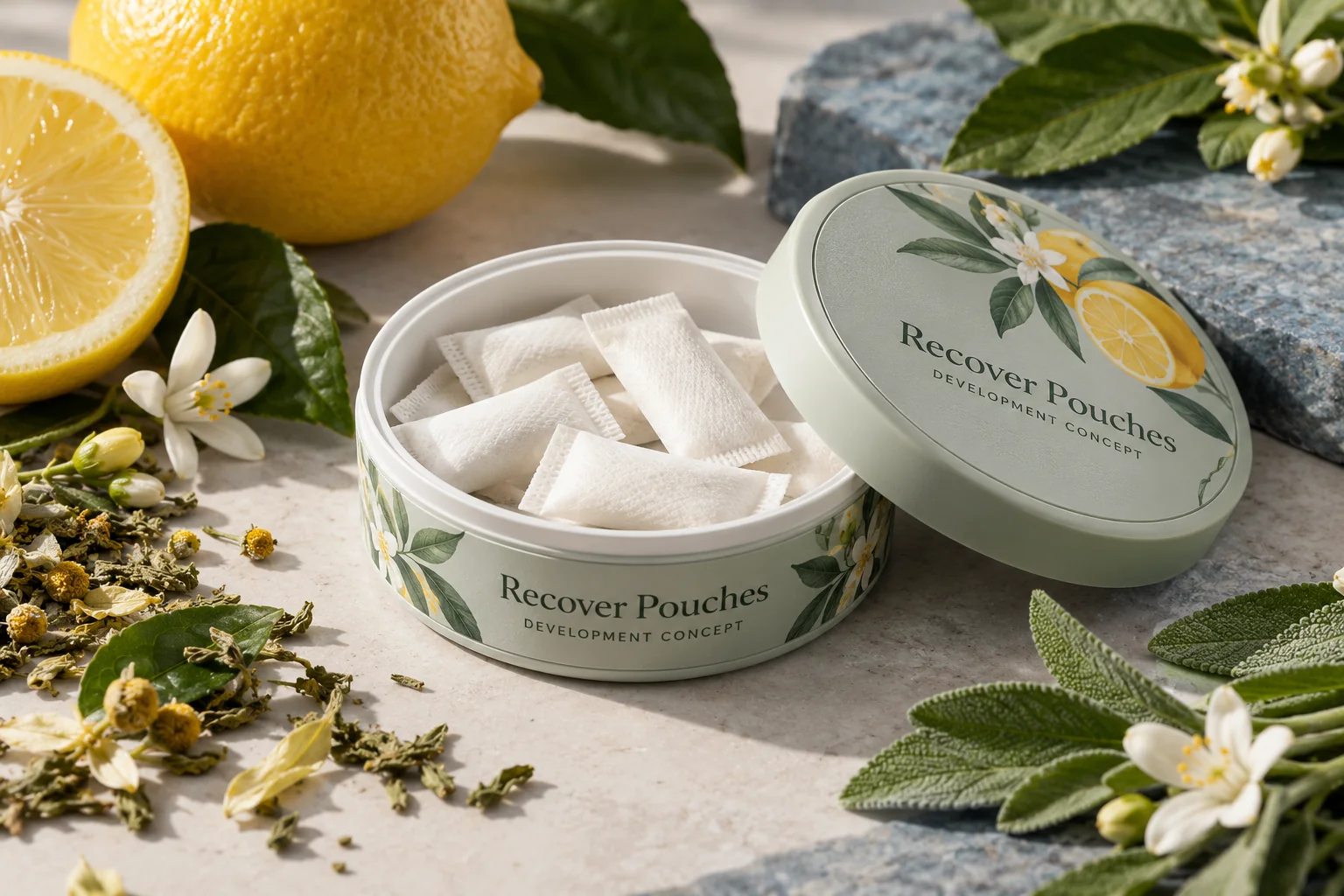
What this concept covers
Defined botanical candidates is the starting direction for this configurable recovery oral pouch brief. The concept can be discussed within OEM, ODM, CRO or CDMO work, depending on whether you bring a finished specification or need development support. It is not an in-stock retail product, a fixed blend or a promise of a particular biological result.
Ingredient specification: Require botanical identity, origin and a specific intended label scope for each candidate.
Prototype focus: Screen the combined brief for complexity, sensory load and evidence gaps before prototype iterations.
Development specification
| Decision | Current concept position |
|---|---|
| Ingredient direction | Defined botanical candidates |
| Flavor starting point | Citrus; final flavor and intensity selected through sensory work. |
| Active amount / total fill | Not fixed. Establish through ingredient review, physical fill trials and an appropriate label basis. |
| Pouch geometry | Mini, slim or regular; dimensions and nonwoven specification are confirmed at sampling. |
| Can and pack count | Shallow round can; 16 or 20 pouches are configurable pack-count briefs, not guaranteed stock formats. |
| Shelf life | No period is asserted before a final-pack stability programme. |
| Onset / absorption | No finished-pouch onset or bioavailability data are claimed. |
| MOQ / cost / lead time | Quoted after the formulation, test and packaging scope is agreed. |
Compare two sample routes
Focused route: A single-ingredient technical brief with origin, particle size and sensory questions made explicit.
Expanded route: A combined ingredient direction only after feasibility work establishes what the physical pouch can carry and how that relates to the intended label.
Fast-acting sublingual recovery?
This phrase describes a claim that would need evidence, not a property established by placing a pouch beneath the lip. Ingredient literature, a flavor-release observation and a finished-product human study answer different questions. Agree any intended wording, evidence requirements and route-of-use assessment before the commercial brief is approved.
What to evaluate in a sample
- Require botanical identity, origin and a specific intended label scope for each candidate.
- Screen the combined brief for complexity, sensory load and evidence gaps before prototype iterations.
- Record appearance, paper feel, fill distribution, seal condition and the agreed sensory scoring conditions.
- Assess the complete pouch and packaging combination, including moisture protection and repeat opening.
- Use a versioned sample record so feedback, formula changes and artwork approval refer to the same prototype.
Market and label review
No concept is presented as repairing cartilage, treating arthritis or replacing an established nutrition or care plan. Destination-market ingredient eligibility, classification, warnings and labeling responsibilities must be resolved for the actual formula. A sugar-free, plant-based or fast-release target is not advertised as a verified finished-product attribute here.
Read the joint & tissue family overview, compare pouch and packaging options or request a sample discussion.